
Systemic Family constellation (SFC) work is a therapeutic modality that allows us to access our inherited ancestral trauma. We are all born with this trauma that is passed down from generation to generation. We all experience this phenomenon, some more than others. This inherited ancestral trauma has been passed from our ancestral lineage as far back as 14 generations. This transference is said to be epigenetic in origin. Epigenetics is our emotional genetic makeup influenced by our environment that is passed from one generation to the next.
If this physical trauma is not processed in the individual’s lifetime, it develops within the cellular memory of that individual. The now embedded trauma is passed down to their offspring through their DNA and they will inherit their parent’s trauma. The child’s expression of this inherited trauma may manifest as emotional issues (depression, anxiety, ADHD, ADD, and so on) or physical issues (Chronic pain, lung issues, joint issues, diagnosable or un-diagnosable chronic illnesses, etc.) or spiritual issues (feelings of unworthiness, not belonging, out of place, lost in direction, etc.)
The original trauma may have been a physical experience, such as an adult or child witnessing a murder or a family member dying by suicide. Trauma may also occur from an event in history such as, war, migration (especially across oceans), genocide, imprisonment, enslavement, etc.
SFC trauma resolution work is an alternative healing technique to modern talk psychotherapy and takes the client deeper into his or her inherited ancestral trauma. When deeply embedded trauma is present within a client’s DNA, talk therapy may not expose the origins of the client’s trauma. Much like allopathic medicine treats the symptoms of the disease, talk therapy addresses the issue at hand and looks for answers to the client’s presenting ailment, but often it never attends to the foundational emotional wound. Thus, although talk therapy can help the client function better in the world, the client is still vulnerable to relapse and backsliding because the root cause remains firmly intact. In contrast, holistic medicine addresses the whole body and the root causes of unwellness, not only just the symptoms. This is the approach of SFC work. Simply put, constellations look at the whole, the roots, and not just the afflicted part.
So, whether a person’s trauma has emotional or physical origins or a combination, SFC work addresses the trauma at its root. An SFC facilitator works with the client to address their remembered trauma. The client does not need to know what the trauma is or how it originated. The facilitator can access information within the morphogenic field, or the knowing field. when a constellation is set. The origin of the client’s trauma then has an opportunity to be revealed and resolved. This is said to be a phenomenological experience for the client and other representatives. Which is to say that during an individual or group setting, we release the construct of the analytical mind, and open to a deeper sensation inside ourselves. We invite the unseen realm to guide us through the process.
If this physical trauma is not processed in the individual’s lifetime, it develops within the cellular memory of that individual. The now embedded trauma is passed down to their offspring through their DNA and they will inherit their parent’s trauma. The child’s expression of this inherited trauma may manifest as emotional issues (depression, anxiety, ADHD, ADD, and so on) or physical issues (Chronic pain, lung issues, joint issues, diagnosable or un-diagnosable chronic illnesses, etc.) or spiritual issues (feelings of unworthiness, not belonging, out of place, lost in direction, etc.)
The original trauma may have been a physical experience, such as an adult or child witnessing a murder or a family member dying by suicide. Trauma may also occur from an event in history such as, war, migration (especially across oceans), genocide, imprisonment, enslavement, etc.
SFC trauma resolution work is an alternative healing technique to modern talk psychotherapy and takes the client deeper into his or her inherited ancestral trauma. When deeply embedded trauma is present within a client’s DNA, talk therapy may not expose the origins of the client’s trauma. Much like allopathic medicine treats the symptoms of the disease, talk therapy addresses the issue at hand and looks for answers to the client’s presenting ailment, but often it never attends to the foundational emotional wound. Thus, although talk therapy can help the client function better in the world, the client is still vulnerable to relapse and backsliding because the root cause remains firmly intact. In contrast, holistic medicine addresses the whole body and the root causes of unwellness, not only just the symptoms. This is the approach of SFC work. Simply put, constellations look at the whole, the roots, and not just the afflicted part.
So, whether a person’s trauma has emotional or physical origins or a combination, SFC work addresses the trauma at its root. An SFC facilitator works with the client to address their remembered trauma. The client does not need to know what the trauma is or how it originated. The facilitator can access information within the morphogenic field, or the knowing field. when a constellation is set. The origin of the client’s trauma then has an opportunity to be revealed and resolved. This is said to be a phenomenological experience for the client and other representatives. Which is to say that during an individual or group setting, we release the construct of the analytical mind, and open to a deeper sensation inside ourselves. We invite the unseen realm to guide us through the process.


The individual constellation process is similar to the group constellation process. The focus client's interview is the same and the issues are revealed. The only difference is that the representatives are assembled in the client's minds eye and 'move' in relationship to one another with the guidance of Catherine as a facilitator.
If the individual constellation is via a video call, physical representatives can be used such as talisman pieces (paper, figurines, or cut-outs). Resolution comes in similar ways and clients may choose to engage in more than one session from week to week until a more complete resolution occurs. To schedule a 15 minute free interview with Catherine, click here and fill out the provided form, If you are ready to schedule a session, please click here to pay. 
|

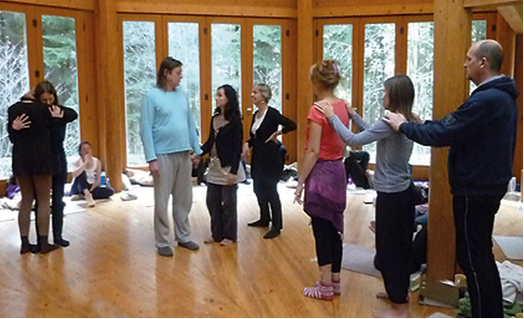
The facilitator, Catherine, will take a client aside, and ask what the client's intention is for setting a constellation and what they might expect as resolution. She numbers a list of representatives needed for the constellation.
The focus client chooses members from the circle of participants to be representatives for themselves and others or aspects of their constellation such as; addiction, depression, issues around money, career, relationships and so on. The representatives chosen do not know who they will be representing for the client. This is known as illuminated constellation. The client then places the representatives in relation to each other within the circle also referred to as the morphogenic field according to his/her inner view. The representatives let go of any thought process of attempting to analyze or ‘figure out’ the personality of the person or emotion they are representing and drop into a deeper space of what they ‘feel’ the energy of who or what they are representing, thereby allowing their reactions and responses to be authentic. This experience is called 'phenomenological' as it cannot truly be logically explained. Catherine works in tune with each representative through feeling and healing questions and through movement. (e.g. changing position) until representatives ‘feel’ that they are in the correct relational position to one another. As the constellation progresses, the representatives will continue to move or be moved by Catherine until resolution to the client's issue begins to emerge. The client usually resonates with the progress as the constellation reaches its culmination. Resolution takes place when the “Orders of Love” are realized. The orders of love are the placement of all members in their correct relationship to each other such as: Son, father, grandfather, great grandfather, great great grandfather, and so on, along with aunts, uncles, brothers, sisters, etc. This is to say that everyone has a place. They all assume their rightful placement. Once the orders of love are achieved, the blockage, or issue that has held the client hostage begins to dissolve. The focus clients' issue was likely related to trauma passed down from ancestors as many as 14 generations ago. The trauma was passed down from one to another through each persons emotional epigenetics. Epigenetics is the process of emotional transference from one generation to another, in this case exposed as trauma. In an emotional constellation where participants represent parts of the client, the orders of love are realigned when the emotional parts are allowed to have a place in the client's constellation and are honored for their presence. At the end of the constellation this new family or emotional image (in the form of healing), replaces the old inner image (in the form of trauma), and allows the client to move forward toward a fresh way of being. If you are ready to join us in a group constellation, click here. |
Click on the image above and watch this short video to better understand the concept of how systemic family constellations is also inherited ancestral trauma healing work and how to find resolution to this trauma.

Systemic:
This refers to an entire system as opposed to individual components.
Epigenetics:
Our emotional genetic makeup influenced by our environment that is passed on from generation to generation.
Morphogenic Field or Knowing Field:
The field created in constellations where we all reside. It is void of mind knowledge and contains only creativity
Phenomenologic:
A way to term the constellation experience. This term is used to encourage everyone to set aside preconceived experiences and reason and simply allow the process to help resolve.
Somatic:
Affecting or characteristic of the body as opposed to the mind or spirit.
Affecting or characteristic of the body as opposed to the mind or spirit.